Cabinet handles occupy only a small part of a kitchen, yet their proportions can change how a cabinet front looks. A pull might span much of a wide drawer, extend down a tall door or provide a compact grip against a larger panel. Each arrangement gives the eye a different line to follow.
Extra-long pulls are particularly noticeable on flat cabinetry, where little else interrupts the surface. Rather than fading into the background, their horizontal or vertical lines become part of the cabinet design. The examples below show how length, shape and placement affect that impression, even before colour or material is considered.
Long handles that follow the cabinet fronts
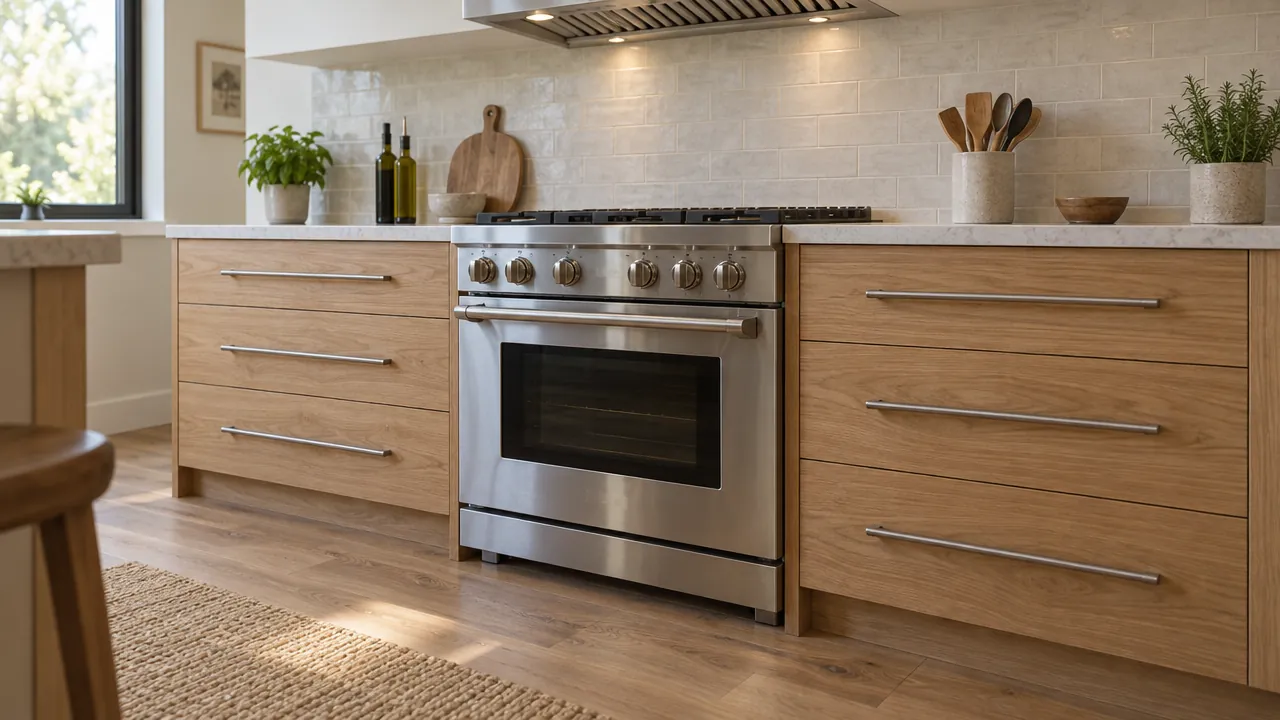
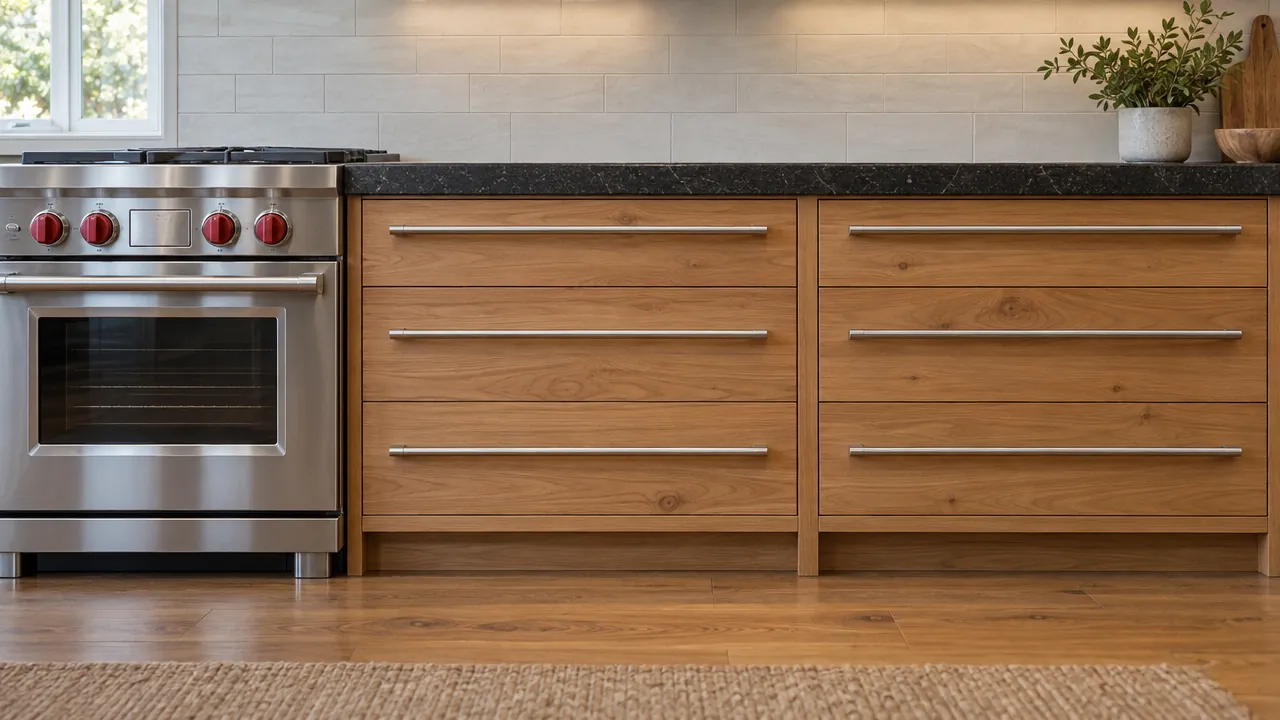
Beside a range, stainless steel pulls run across much of a set of wide wooden drawer fronts. Their strong horizontal lines follow the proportions of the drawers instead of placing a small piece of hardware near each centre. Metal on the range visually connects with the pulls, while the dark worktop forms another horizontal band above them. Shorter pulls would leave more uninterrupted wood on view; at this length, the handles become a prominent part of the cabinetry.
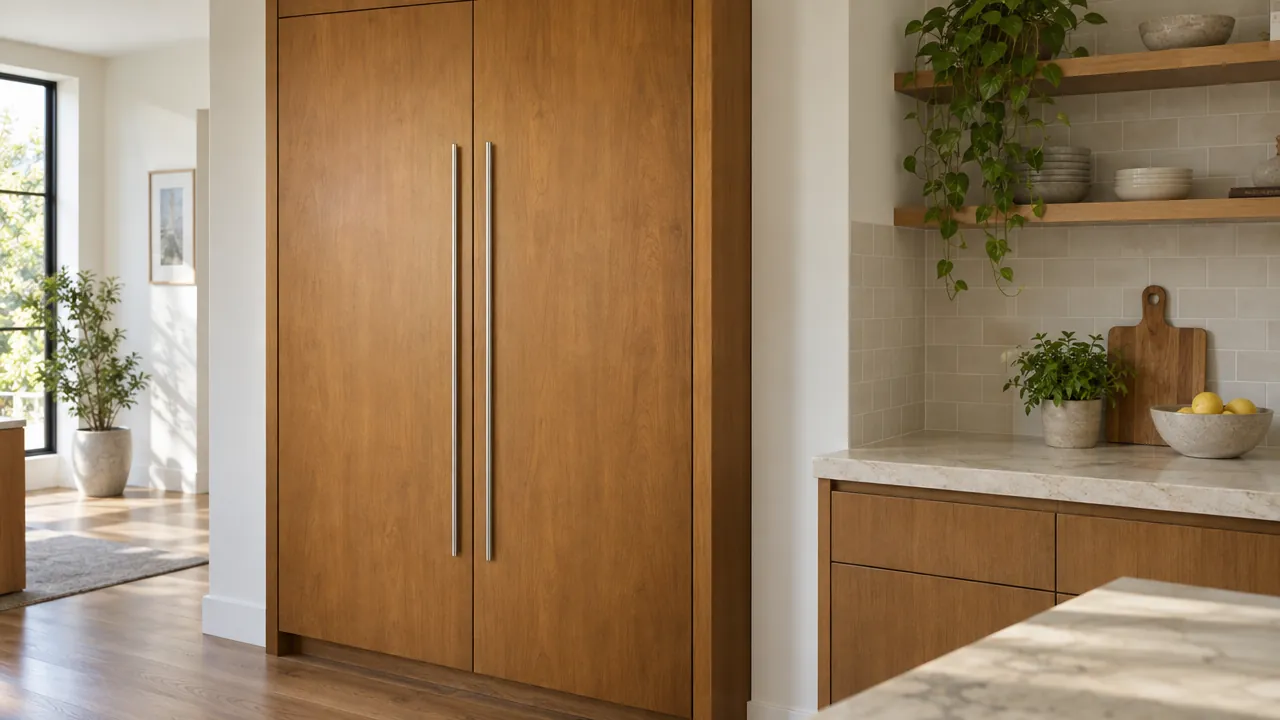
On tall wooden doors, two slim metal handles extend down much of the fronts. They work as vertical details rather than small grips placed near the centre. Although they are long, their narrow profile leaves the wood clearly visible both between the handles and around them. Their length follows the scale of the doors, reinforcing their height instead of visually dividing the tall fronts into smaller sections. Here, a restrained shape still has a substantial effect because of its placement.
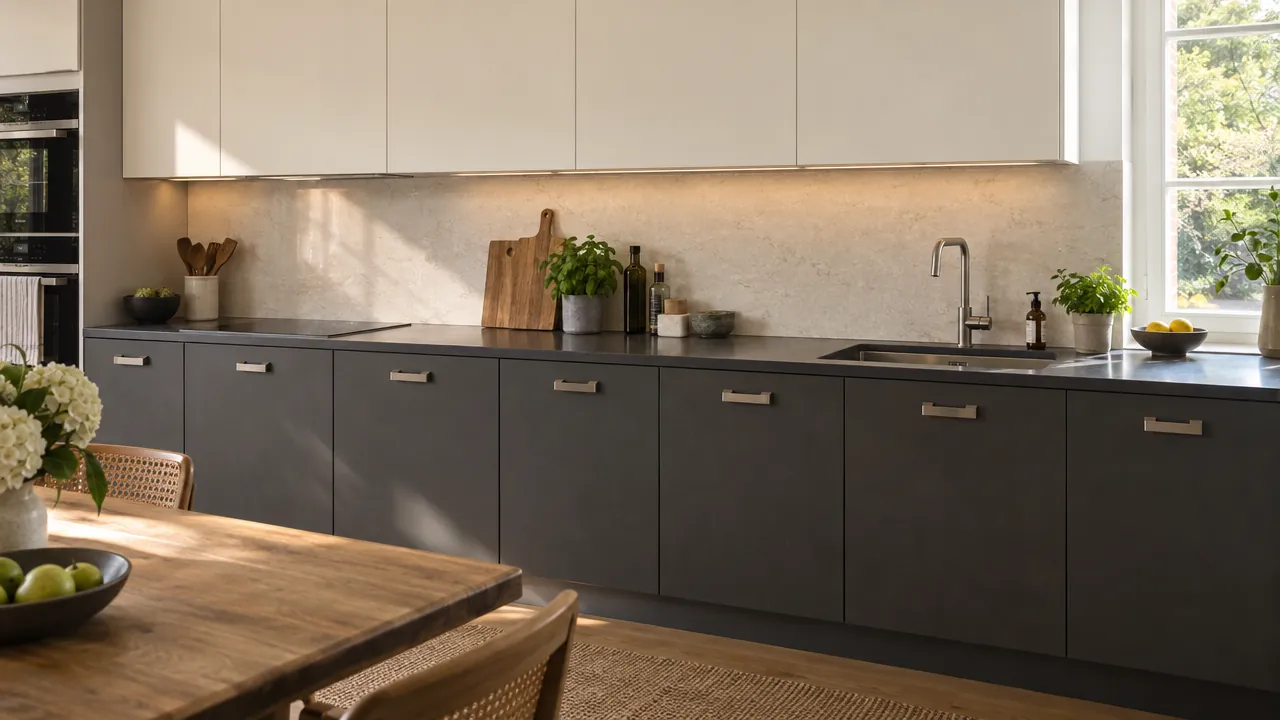
Another kitchen takes the opposite approach on its dark lower cabinets. Short rectangular pulls with broad ends make small metal accents across the base units without spanning the doors. The upper cabinets have no visible hardware from this angle, leaving those compact lower handles more distinct. Their squared outlines relate to the straight edges of the doors, worktop and sink. Against the muted cabinet finish, each pull reads as an individual feature, despite its modest length.
Small hardware beside stronger features
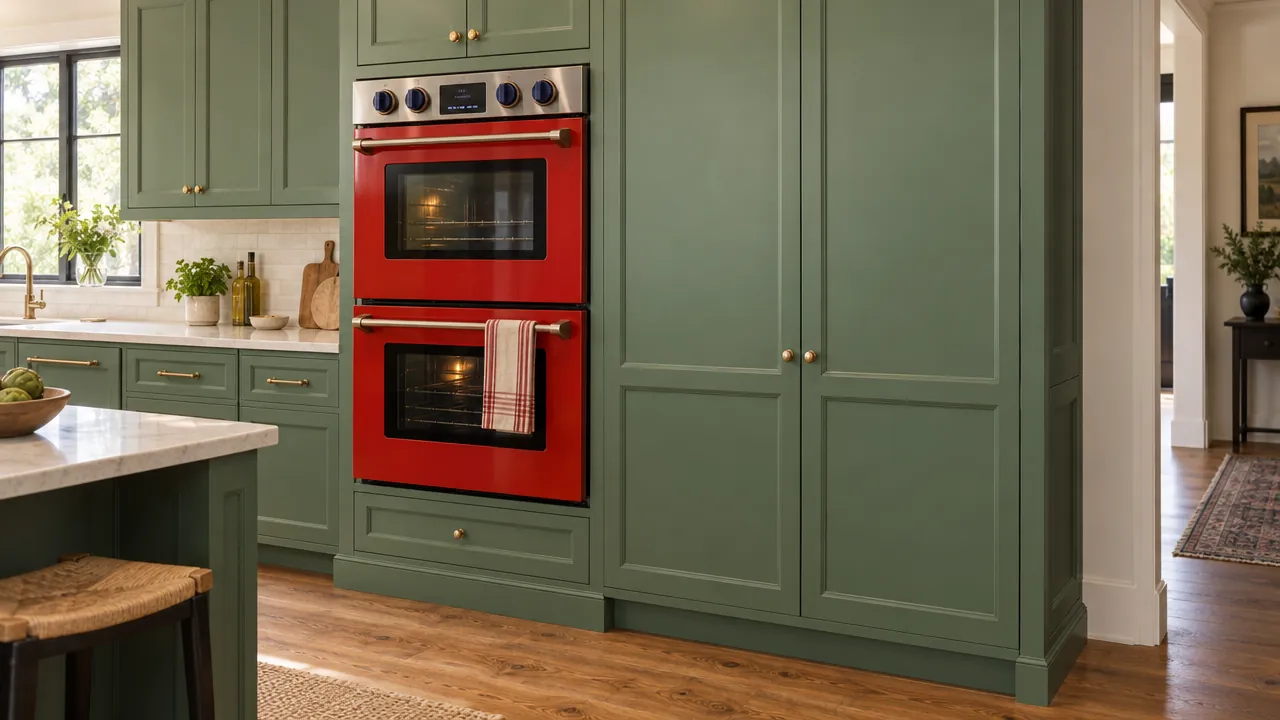
Green panelled cabinetry surrounds two red ovens, and small brass-toned pulls sit near the lower corners of the tall cabinet doors. The warm metal stands apart from the green paint, but its limited size keeps it from competing with the large appliances. Bigger bar pulls would introduce another strong element alongside the ovens. These smaller pieces instead leave the cabinet panels as the dominant feature, showing that a handle need not be long to register against a painted front.
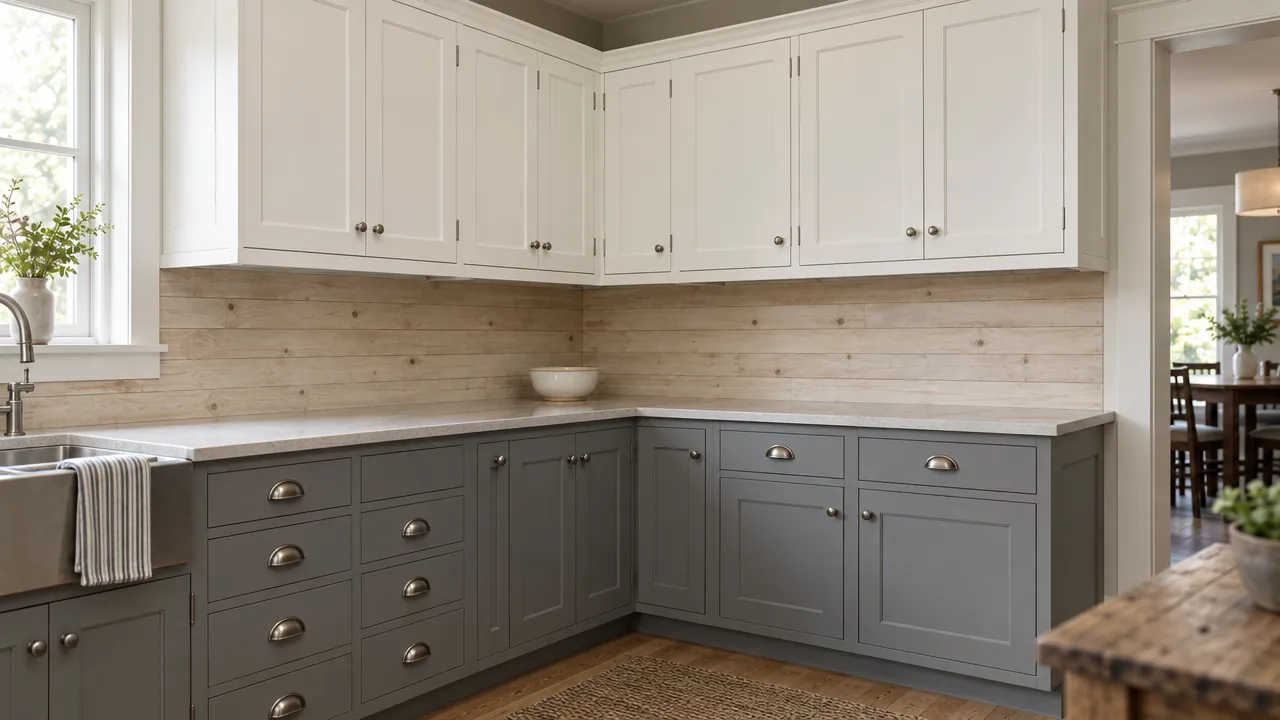
In a kitchen with dark base cabinetry, metal cup pulls cross the drawers and offer a curved horizontal grip. The doors below have smaller knobs rather than repeating the cup shape. White upper cabinets also use knobs, so their tall recessed panels remain free of long metal bars. The hardware therefore changes according to the kind of front it serves. A similar metal finish connects the different pieces, even though the drawers, lower doors and upper doors do not share one handle style.
Wooden drawers on either side of a range carry long horizontal bar pulls, each centred on its own front. Repeating that position produces parallel metal lines across both sides of the cooking area. Stainless steel appliances occupy the middle, and the pulls carry a related metal finish onto the surrounding cabinetry. They do so without covering the wood grain: the handles are prominent as repeated lines, while the material of the drawers remains visible around them.
Handles within a wider pattern
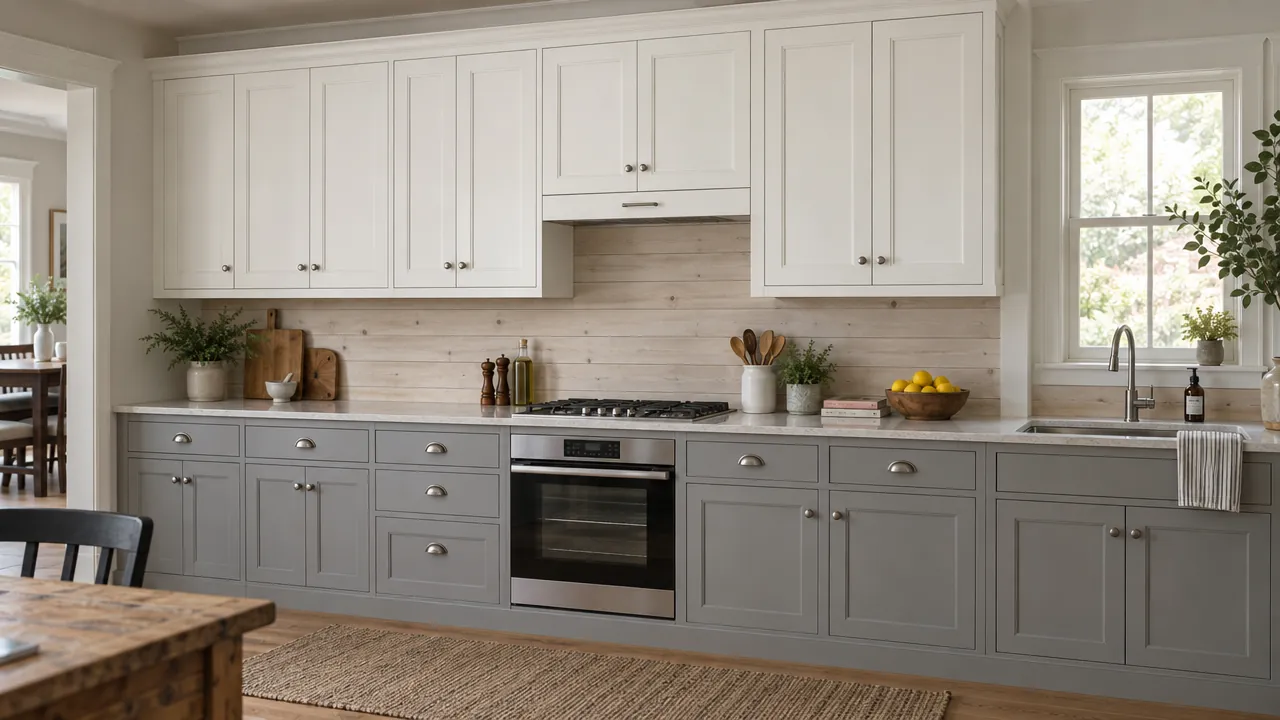
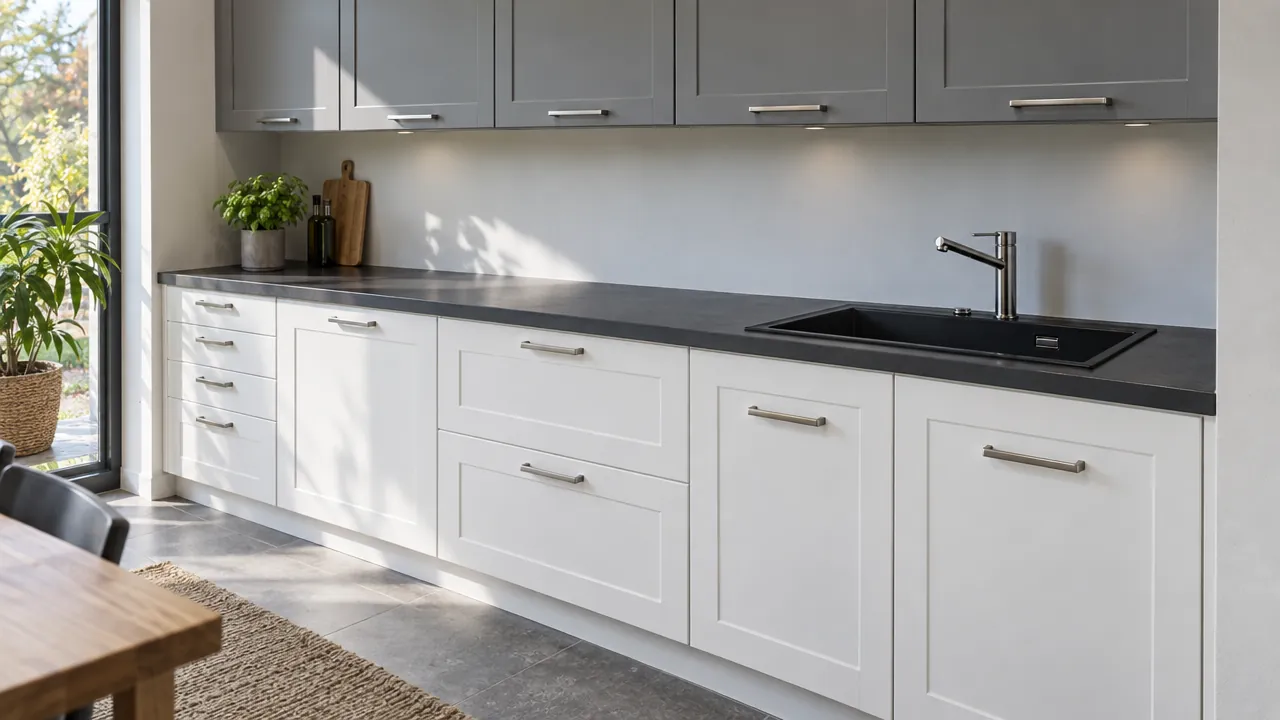
White panelled cabinets use restrained knobs and pulls instead of oversized hardware. Most of each tall door panel stays uninterrupted, keeping its recessed detailing visible. On the lower grey cabinetry, drawers have cup pulls and doors have smaller hardware. This kitchen already contains numerous lines from cabinet panels, splashback boards and worktop edges. Compact handles avoid adding another dominant pattern to that collection, while still giving the different types of front their own suitable grips.
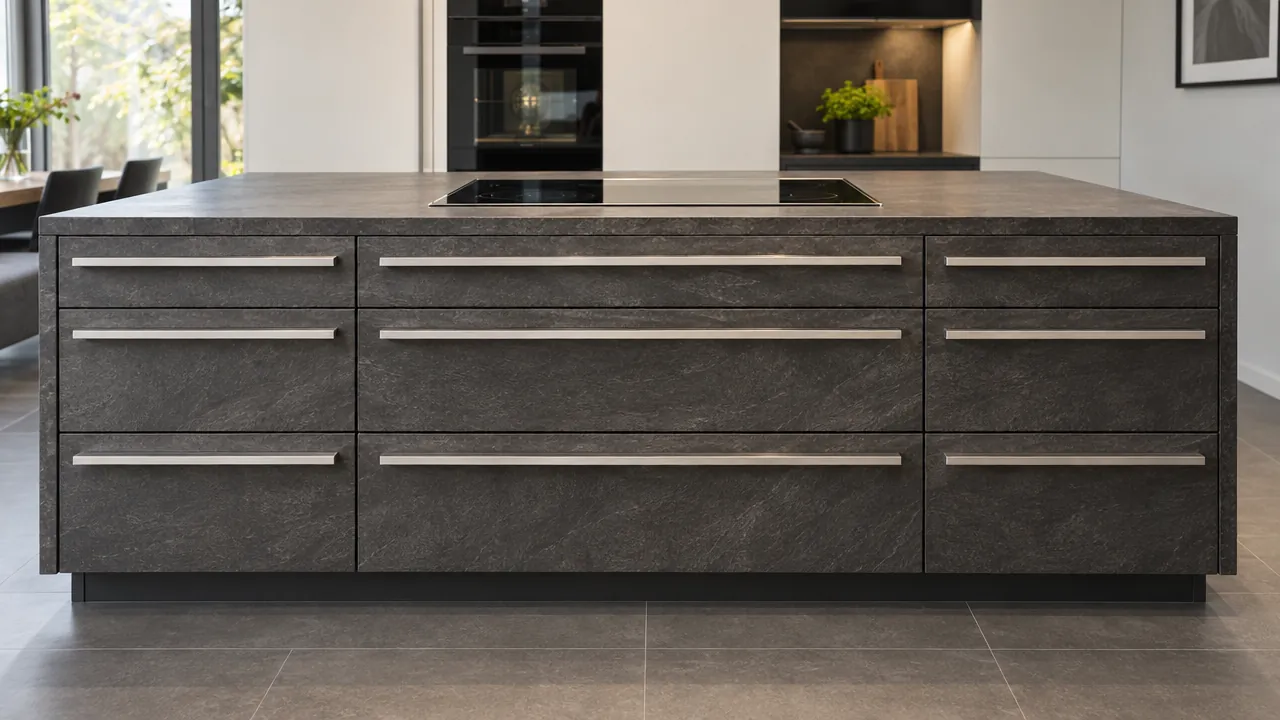
Beneath a hob, long metal pulls stretch across much of a run of dark drawer fronts. Several handle sizes follow the different widths of the cabinetry, and their repeated placement lines up from one drawer stack to the next. Across the island, they form horizontal bands rather than looking like small fittings added after the cabinet design. Brushed metal is easy to pick out against the dark, textured fronts. On this otherwise flat run, the hardware becomes one of the most visible details.
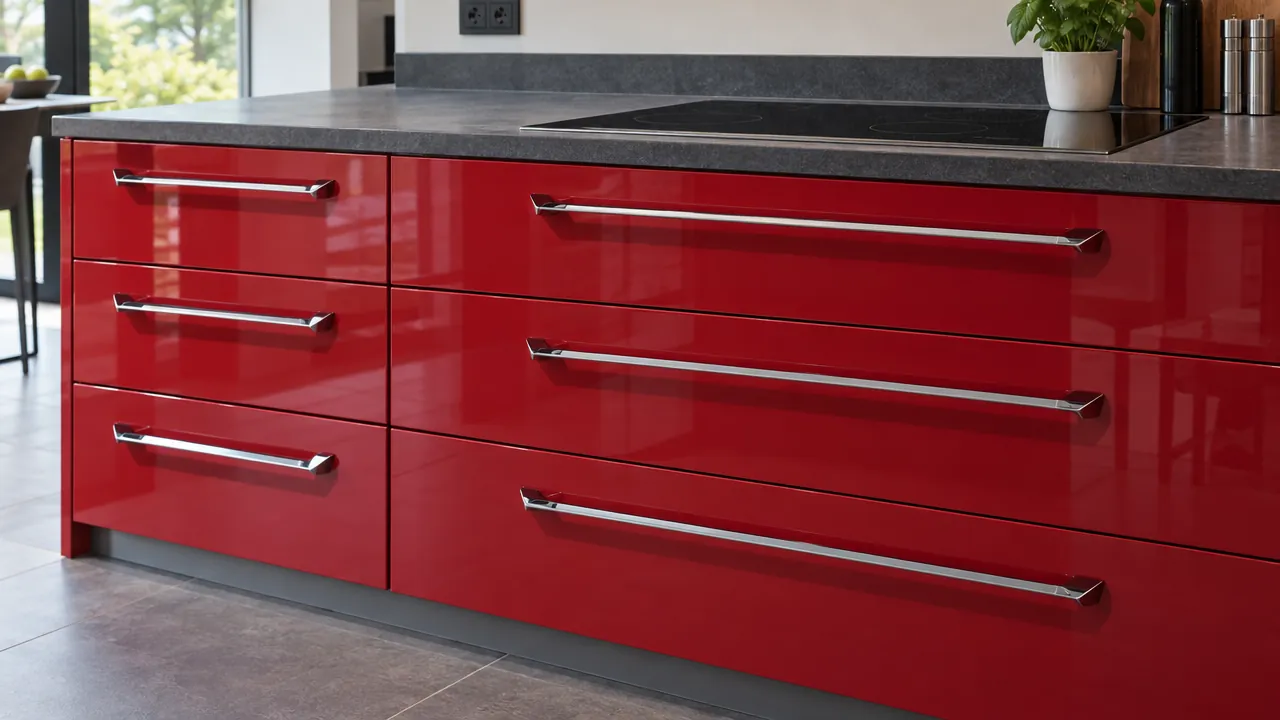
Glossy red drawer fronts take a similarly conspicuous approach, using wide metal handles with angled ends. The handles create dark reflections and strong horizontal lines across the bright surfaces. Wider drawers receive longer pulls, keeping the hardware in proportion to each front. Chrome stands out against the red, particularly because few other details break up the flat cabinetry. Replacing these handles with small knobs or short pulls would therefore change much of what is seen across the run.